
Conference rooms that start with one touch
Display on, camera live, mics balanced, calendar joined — without IT in the room.
Real pricing ranges, infrastructure realities, and the operational thinking behind serious commercial systems — written by an integrator working in Manhattan, the Bronx, and Westchester.
Regional Reality
National price calculators don't account for the buildings we work in. Pre-war construction, occupied operations, union access rules, and freight logistics shape every commercial project in this market.
After-hours and overnight work windows so operations never stop. Every install is staged around your business.
COI requirements, building engineer coordination, badged access, and freight rules add real scope to every project.
Cable pathways through pre-war construction take longer, require specialized methods, and rarely follow a straight line.
Scheduled elevator windows, loading-dock reservations, and staged equipment delivery — built into the project plan, not improvised.
Restricted modifications, historic façades, and difficult infrastructure pathways shape the entire approach to installation.
Infrastructure First
A professional AV system is an operational platform — not displays and speakers mounted on walls. The visible technology is the last 10 percent. The rest is what makes it reliable.
Every modern AV system runs on the network. VLANs, QoS, and switch capacity decide whether the system feels instant or sluggish.
Labeled, dressed, and documented. The work hidden behind the rack is what makes the next decade of service possible.
Microphones, displays, and speakers don't sound right out of the box. The DSP and tuning are what make a room intelligible.
One interface for the room. Staff operate confidently without training because the complexity is engineered out of the experience.
Built so rooms, zones, and locations can be added later without rebuilding the foundation.
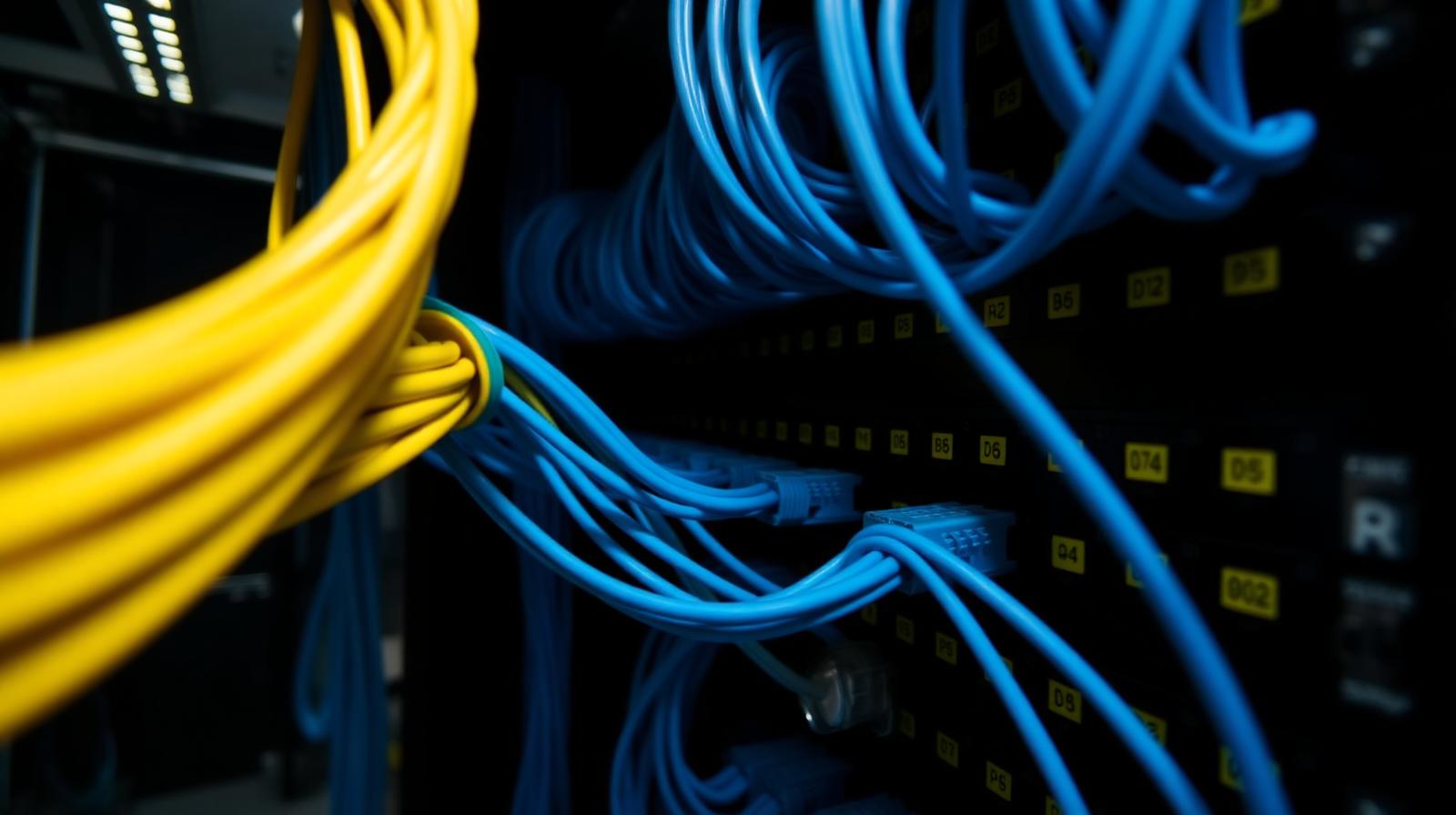
"The system that looks simple to operate took serious infrastructure to build."
Operational Reliability
The difference between a properly integrated system and a poorly installed one is rarely the gear. It's the operational experience — how the room behaves the moment someone walks in.
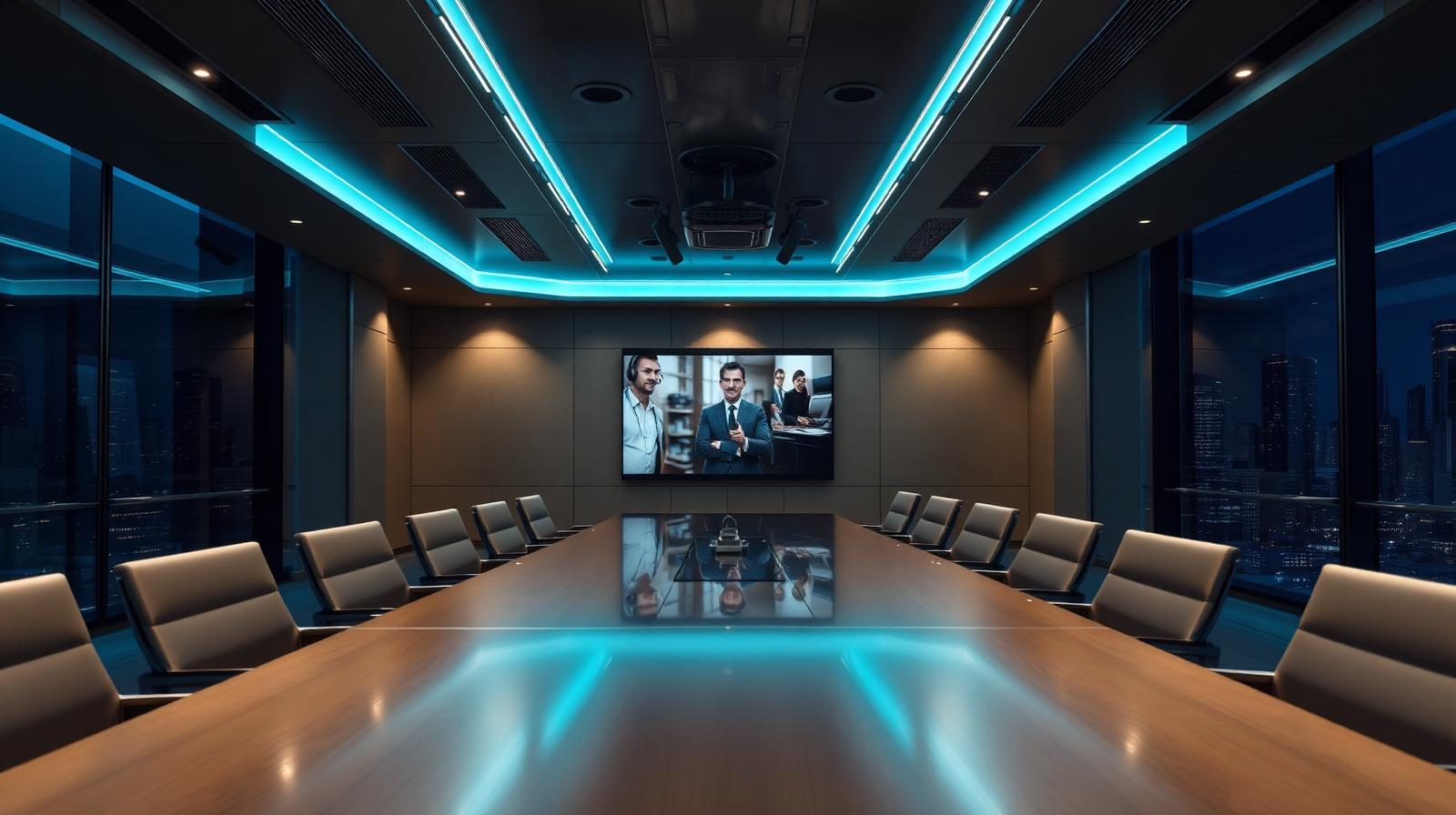
Display on, camera live, mics balanced, calendar joined — without IT in the room.
Staff route any source to any screen from a tablet. No remotes, no missed kickoffs.
Volunteers select 'Sunday morning' or 'Wednesday evening' — lighting, audio, and projection follow.
Auditorium presets handle assemblies, recitals, and games with a single dropdown.
Menus, promotions, and wayfinding push to every display from one screen. No USB sticks.
Investment by Environment
Ranges based on real NYC and Westchester installs. Flat-rate quote after a walkthrough — never per-hour, never a surprise line item.
Typical investment
$8,000 – $20,000
Operational goals
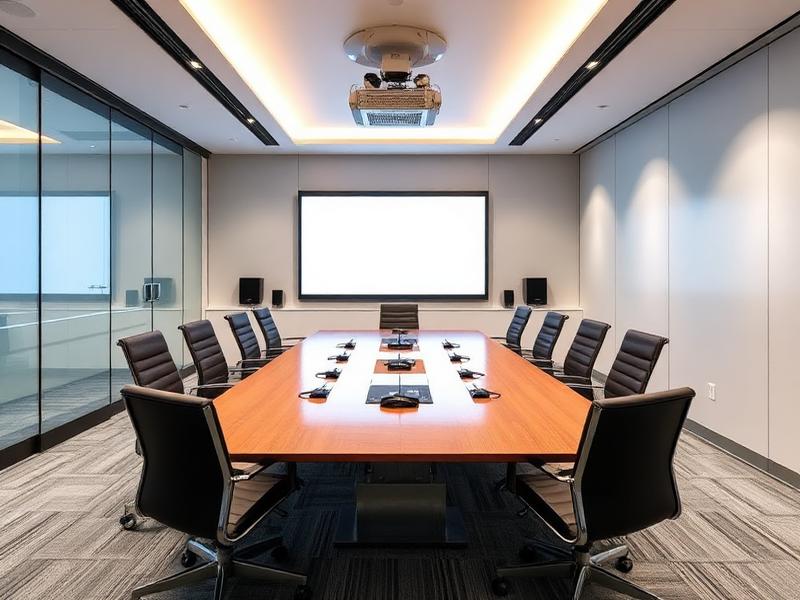
Reliable one-touch video conferencing for 4–8 person rooms used every day.
Typical scope
4K display, in-room camera and mic, single touch controller, room scheduling integration.
Infrastructure
Network drop, low-voltage cabling, mounted display infrastructure, basic acoustic treatment.
Integration complexity
Standardized room template — fast to deploy across multiple floors.
Typical investment
$20,000 – $75,000
Operational goals
Executive-quality video, audio intelligibility, and one-touch control for daily client and board meetings.
Typical scope
Dual displays or LED, beamforming or ceiling mics, DSP audio, PTZ camera, integrated control system.
Infrastructure
Structured cabling, network VLANs, rack-mounted DSP and switching, in-wall conduit.
Integration complexity
Custom programming, acoustic tuning, integration with calendar and identity systems.
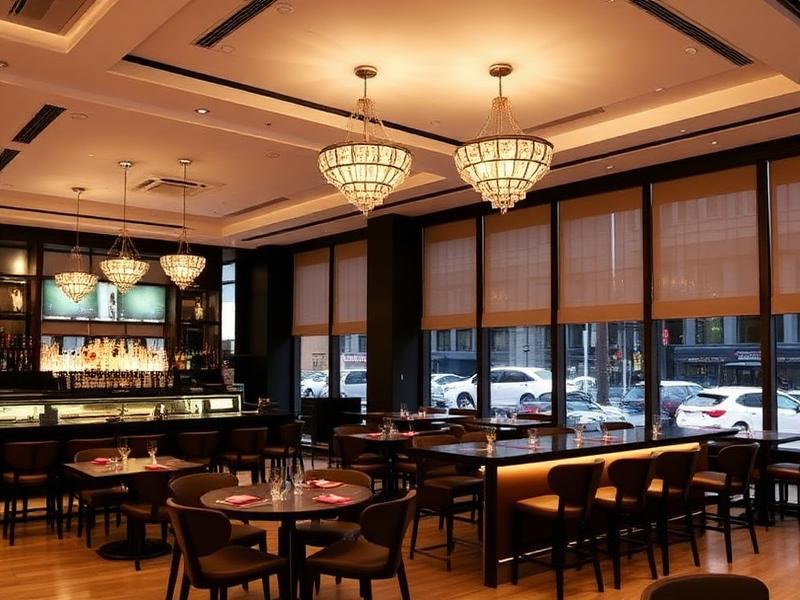
Typical investment
$25,000 – $150,000
Operational goals
Multi-source routing across many displays without manager intervention. Reliable through every service.
Typical scope
Display walls, distributed audio zones, source matrix, licensed commercial streaming, tablet control.
Infrastructure
AV-over-IP backbone, dedicated network, commercial-grade displays, ceiling and patio speakers.
Integration complexity
Source matrix design, zone planning, staff-facing control UX, licensing compliance.
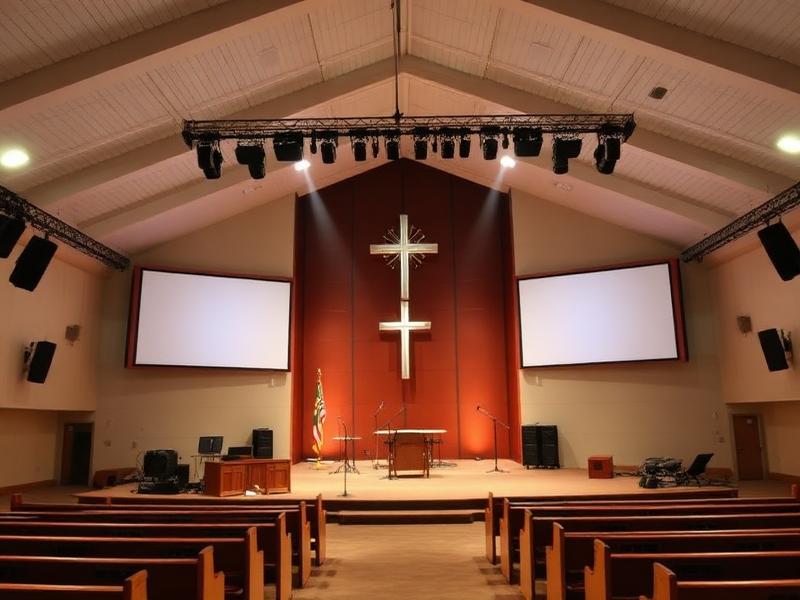
Typical investment
$60,000 – $400,000+
Operational goals
Intelligible speech, musical fidelity, live video, and scenes that volunteers can run confidently.
Typical scope
Line array or distributed PA, digital mixing, wireless mics, projection or LED, livestream, lighting scenes.
Infrastructure
Acoustic treatment, structured cabling, rigging, dimming infrastructure, livestream encoding rack.
Integration complexity
Acoustic modeling, RF coordination, scene programming for non-technical operators.
Typical investment
$150,000 – $1M+
Operational goals
Coordinated AV, signage, and control across many rooms, floors, or locations — managed centrally.
Typical scope
Standardized room templates, campus-wide signage, centralized monitoring, training program.
Infrastructure
Network architecture, centralized racks, redundant power, asset and content management platforms.
Integration complexity
Multi-site rollout planning, change control, ongoing managed services.
What drives costs up
Working around millwork, ceilings, and finishes that must be preserved.
Cable runs take longer and require specialized pathways.
Overnight and weekend labor, badged access, and COI coordination.
Lifts, rigging, and longer cable pulls add real hours.
More endpoints means more matrix capacity, processing, and tuning.
Tuning and UX design are engineering work, not configuration.
Dimming, scenes, and DMX coordination add a full trade to the project.
Weatherized gear, conduit, grounding, and seasonal commissioning.
What keeps costs down
The clients with the most efficient budgets aren't cutting corners — they're sequencing the work, standardizing rooms, and engaging early.
Engaging during renovation or new construction is the single biggest cost saver.
Cable and conduit installed once — never opened again.
Lead with the highest-impact rooms; expand on the same platform.
Identical templates across many rooms compress design, deployment, and training costs.
Future zones, rooms, and locations planned at day one — never a rebuild later.
"We quote what the project actually costs — after we've seen the space, the walls, and how the room is used."
From Experience
Most of the systems we rebuild started with the wrong foundation. These are the patterns we see most often across NYC and Westchester.
Residential panels fail under 12+ hour duty cycles. Replacements cost more than the original commercial display.
AV traffic on the same VLAN as guest WiFi. Systems feel laggy and unreliable for reasons the displays can't fix.
Even premium speakers sound bad in the wrong location. Coverage is a design problem, not a gear problem.
Wireless mics on shared frequencies cause RF dropouts that look like equipment failure but aren't.
Equipment buried behind sealed millwork. Future service calls cost three times what they should.
Adding one room later requires opening walls and rebuilding the rack. Day-one planning prevents it.
How We Work
From a single boardroom to a multi-floor build — the same six stages run by the same team. Predictable, documented, and accountable end-to-end.
We listen first. Goals, constraints, budget, timeline — captured before anything is proposed.
On-site walk-through. We document the space, existing infrastructure, and the realities behind the walls.
Engineered scope, line-item pricing, and a clear plan you can read without a glossary.
Clean, scheduled, and respectful of the space — finished walls, occupied homes, live businesses.
Scenes, presets, and interfaces tuned to the way you actually use the room. Then we teach you.
Real numbers to call, real people who know your system, and remote diagnostics when minutes matter.
Frequently asked
Quotes vary because scope, infrastructure, and engineering are often interpreted differently. A low quote frequently excludes networking, programming, acoustic tuning, or the cabling work that makes the system actually function on day one. Our quotes are flat-rate after a walkthrough so the price you see is the price you pay.
Flat-rate, after we've walked the space and understood the operational goals. Hourly billing on a commercial AV install almost always produces surprises. A flat quote forces honest scoping up front and gives your finance team a real number to plan against.
Sometimes — but in occupied commercial spaces in NYC and Westchester, most of our work happens after hours, overnight, or in coordinated weekend windows. We plan around your operations, building access rules, and freight elevator schedules, not the other way around.
Single-room installations typically run 1–3 weeks from quote to commissioning. Multi-room or multi-location rollouts run 6–16 weeks depending on construction coordination, lead times on commercial displays and processors, and access windows in occupied buildings.
Yes. We offer managed service agreements for monitoring, firmware updates, and remote support. Every system we deliver is documented, labeled, and built to be serviced — by us or by any qualified integrator down the line.
Start with a Walkthrough
Numbers on a page are a starting point. Your building, your operation, and your timeline all affect the real number. Schedule a site assessment and we'll walk the space, understand what you need, and come back with a scope you can actually approve.